|
|
|
Certificate in Peripheral Manual Therapy (CPMT)
By
Manual Concepts, Australia |
|
Date:
15th – 19th April, 2012 |
|
|
|
|
|
|
|
|
|
Overview
|
Syllabus
|
Course Philosophy | Target Audience |
Instructors |
| |
|
|
|
Programme Overview |
| |
This manual therapy programme is aimed
at merging the examination of the joint,
muscle and neural systems into an
integrated holistic examination
procedure. We place strong emphasis on
teaching clinicians the ability to
perform an accurate and specific manual
therapy examination. The examination and
treatment approach is eclectic, based on
a range of different concepts and ideas. |
| |
Course Content |
| |
The course will cover the anatomical and
functional basis to the evaluation of
pain disorders of the peripheral joints.
Of special interest will be clinical
practice, emphasizing clinical
examination, evaluation, interpretation,
differential diagnosis and treatment.
This course will be conducted in
lecture, tutorial and workshop format
for the clinician or academic who is
interested in manual therapy, manual
medicine or musculoskeletal medicine. It
is anticipated that the course content
will be suitable to individuals who are
seeking new knowledge, to individuals
seeking to expand their knowledge and to
those individuals seeking the
stimulation of clinical interaction.
Whilst the course will be presented at a
high level this should not be seen as a
barrier to participation for those with
little or with no previous experience in
this special area. As a result of
attending the course it is anticipated
that participants will gain personal
satisfaction as in a variety of ways
that will enhance their individual
requirements. There are therefore no
pre-requisites for participation
1. Relevant anatomy, pathoanatomy, and
biomechanics of the peripheral joints.
2. Regional assessment of the shoulder,
elbow, wrist and hand, hip, knee, ankle,
and foot
3. Analyze posture types and the
relationship of posture type to normal
movement and specific dysfunction
4. Movement analysis and how this
relates to specific dysfunction
5. Clinical pattern recognition
6. Clinical reasoning
7. Physical examination procedures aimed
at the joint, neural and muscle systems
8. Use of case histories, written and
role-play
9. Technique demonstration with closely
supervised practical sessions
10. Clinical technique application
11. Development of appropriate
diagnostic specific treatment strategies
and appropriate treatment technique
application |
| |
Course Philosophy |
| |
Joint System
As part of the assessment of the joint
system we aim to teach a range of
passive motion testing procedures.
Identification of joint hypo/hyper
mobility is an important step in
identifying patients likely to respond
to manual mobilization. Joints with
impaired movement can be treated with a
range of mobilization techniques
including mobilization with movement.
Neural System
Neural tissue dysfunction is an
important aspect of the physical
examination. A comprehensive overview of
neural tissue pain disorders is
presented before assessment procedures
and differential diagnosis for 3 types
of neural dysfunction, neuropathic pain
with sensory hypersensitivity,
peripheral nerve sensitization and
denervation (axonal compromise).
Assessment to distinguish these problems
will be demonstrated and practiced. The
clinical relevance of distinguishing
these different types of disorders will
be presented, particularly in relation
to management. .
Muscle System
An emphasis of this programme is a
functional approach to the assessment of
the muscle control system. As well we
address the theoretical concept of “core
stability”. Recent research appears to
be downplaying the importance of “core
stability” in both spinal and peripheral
pain disorders. It is important to
recognize that not all patients require
motor control retraining. There is ample
evidence to suggest that only a small
proportion of patient have instability.
Treating all recurring pain disorders
with “core strengthening” is not
appropriate and the literature shows
this does not work. Determining which
patients need a muscle retaining
approach is an important part of this
programme. A systematic graded,
functional approach to the management of
patients with motor control impairment
will be taught.
A core principle of the programme is the
ongoing analysis of the examination
findings from the subjective and
physical examination procedures. To
ascertain an appropriate manual therapy
diagnosis critical analysis is developed
through clinical reasoning applied to
specific case studies.
This programme does not provide the
participants with a recipe approach to
treatment. Students will be able to
develop though sound methodology,
appropriate treatment strategies with
logical progression over time. |
|
|
Target Audience: Physiotherapist |
|
|
This course will be conducted in
lecture, tutorial and workshop format
for the clinician or academic who is
interested in manual therapy, manual
medicine or musculoskeletal medicine. It
is anticipated that the course content
will be suitable to individuals who are
seeking new knowledge, to individuals
seeking to expand their knowledge and to
those individuals seeking the
stimulation of clinical interaction.
Whilst the course will be presented at a
high level this should not be seen as a
barrier to participation for those with
little or with no previous experience in
this special area. As a result of
attending the course it is anticipated
that participants will gain personal
satisfaction as in a variety of ways
that will enhance their individual |
|
|
Instructors |
| |
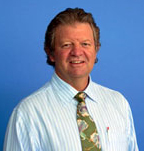
Kim
Robinson
BSc, Grad Dip Manip Ther (Distinctions).
Adjunct Senior Teaching Fellow (Curtin).
Visiting Lecturer (University of Dublin,
Trinity College), Accredited Mulligan
Concept Teacher. Director Manual
Concepts, Mt Claremont, Western
Australia.
Kim Robinson has developed a reputation
as a leading figure in manual therapy
education. He was formerly a lecturer
and clinical teacher on the Postgraduate
Diploma in Manipulative Therapy
programme at Curtin University of
Technology for many years before
establishing Manual Concepts. He now
conducts a variety of lectures and
clinical programmes around the world.
Kim is an active member of the
Australian Physiotherapy Association and
the Musculoskeletal Physiotherapists
Association of Australia. Kim is an
accredited teacher of the Mulligan
Concept and also the Australasian
Regional Manager of the Mulligan Concept
Teachers Association. His research
interests and publications include
manual diagnosis, cervicogenic headache,
neck pain and the application of the
Mulligan Concept. |
 |
| |
|
|
|
|